MAY 28, 2026
The heart and kidneys are closely connected. Proper communication between these two organs is crucial for their function, and damage to one often has major consequences on the other. Nevertheless, much remains unknown about how these organs communicate in our body. Researchers at reNEW Leiden have developed a unique multi-organ model system using stem cells to study this communication more effectively in the laboratory. The study has been published in the scientific journal**Cell Communication and Signaling**.
Communication between different organs plays a crucial role in health and disease. This importance is evident in cardiorenal syndrome (CRS), a group of disorders in which damage to either the heart or kidneys leads to dysfunction in the other organ through a cascade of signals and physiological adaptations. Although the importance of this interdependence has been recognized for some time in the clinic, much remains to be discovered about the molecular and cellular mechanisms underlying it. Researchers at reNEW Leiden therefore used hiPSC-derived models to develop a novel system that enables them to study these mechanisms.
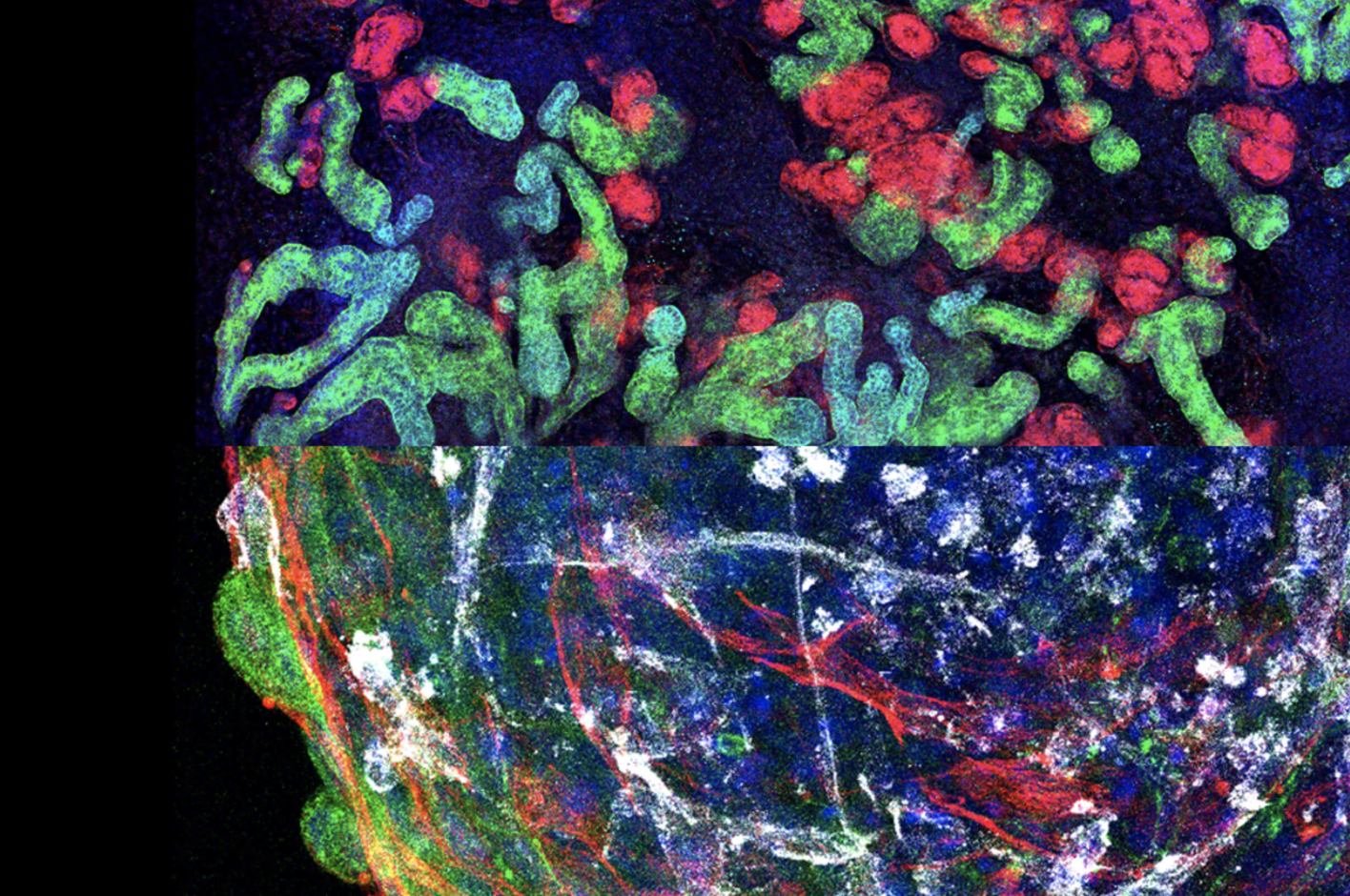
Where heart and kidneys come togetherSeveral research groups in reNEW collaborated to achieve this. First author Dr. Beatrice Gabbin explains: “The team of AI Milena Bellin has extensive experience in modeling the heart with stem cells. Such stem cell-derived models include cardiac microtissues, which were previously developed by Dr. Viviana Meraviglia and others in the group. Likewise, the team of AI Cathelijne van den Berg has specialized in producing stem cell-derived kidney organoids. We combined this knowledge and expertise to develop a platform in which both cell models are cultured together. This allows us to study how the tissues may communicate with each other in vitro after damage.”
Gabbin also spent a month at the Murdoch Children’s Research Institute to acquire additional knowledge and skills in the group of reNEW Melbourne AI Jessica Vanslambrouck. Gabbin is now working as a postdoctoral researcher in this group.
Damaged kidneys, consequences for the heartUsing the new multi-organ model, the team studied clinical CRS in which acute kidney injury leads to impaired heart function. “Using two types of nephrotoxic drugs, we first damaged kidney organoids. We then removed the drugs and co-cultured damaged kidney tissues with healthy cardiac microtissues for several days. After that, we examined how this affected the function of the cardiac microtissues,” says Gabbin. “We were excited to see our findings were in line with key features of acute reno-cardiac CRS, where early endothelial dysfunction driven by systemic inflammation is observed and may precede myofibrillar damage.”
CRS up-closeIn the next phase of the study, the team investigated what happens at the molecular level in both kidney organoids and cardiac microtissues. The results confirmed that not only the kidney organoids responded to damage caused by nephrotoxic drugs, but this also indirectly triggered molecular changes in the cardiac microtissues.
“With this work, we are laying a solid foundation for more in-depth follow-up research into heart-kidney crosstalk and the cellular and molecular mechanisms that lead to CRS,” says Van den Berg. Meraviglia adds: “By combining advanced stem cell-derived cardiac and kidney models, we can now start dissecting inter-organ communication mechanisms that were previously very difficult to study in human systems.”
Bellin concludes: “Through our model, we hope to identify targets that could eventually be used for specific therapies against CRS, opening new possibilities for translational and personalized medicine approaches.”